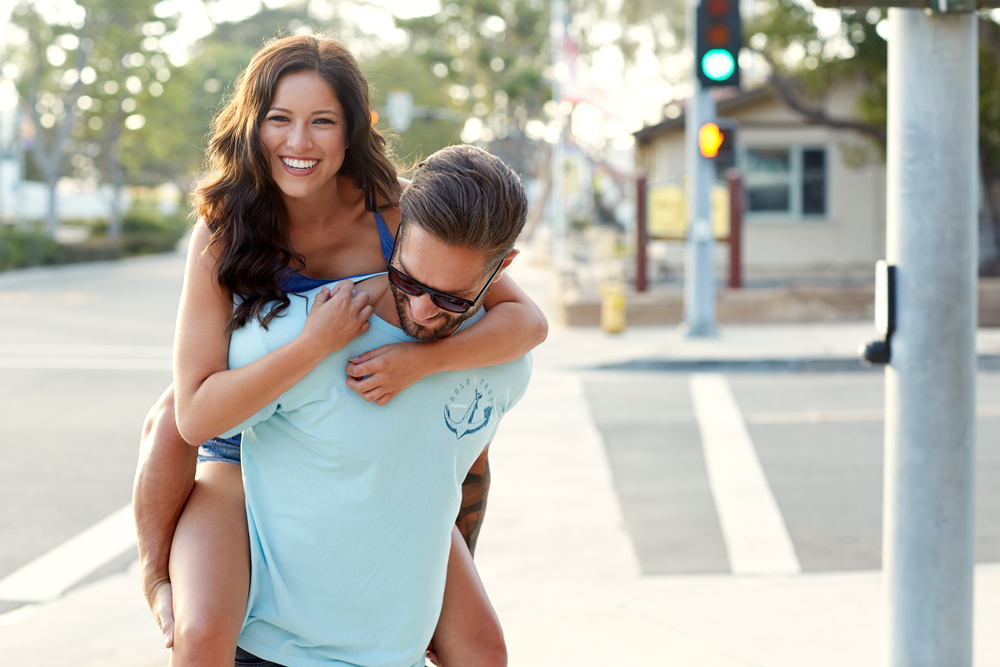
A Lap Around the Studio

2013/4/13 (Saturday) | Filed under: Head Shots, San Diego, studio

Sometimes people are surprised at the outdoor photo ops we have just outside the studio, as industrial as the space is, with the right framing, nice outdoor shots can be had. Everything here was taken inside the studio or within about 30 yards of the door.  Of course, a beautiful subject with a serious case of perma-smile helps too! If your head shots need an update, join me for a lap around the studio someday soon!

Yellow Submarine – A Commercial Photography Adventure

2013/4/5 (Friday) | Filed under: Commercial Work, Lifestyle

The waters on the leeward side of Catalina Island have a way of gracefully shimmering  in early morning, like a jazz singer’s sequin dress, slowly swaying and sparkling in theater lighting. September mornings were 70 degrees, quickly succumbing to the strong sun and rising to 85 or more by mid morning. I spent the duration of this photo shoot on the ship above, capturing the crew and some daily activities surrounding the apparatus hung from the back- a submarine rescue system contracted by the Navy. The part Navy, part civilian crew was very hospitable. Over the course of two days I learned quite a bit about submarines, boating in general and day to day operations on a Navy contractor’s ship.
Our transport to and from the ship (and for getting shots from the water level perspective) was in the little boat shown here- known as a RHIB. That stands for “rigid hulled inflatable boat”.  It could just as easily stand for ridiculously horsepowered inflatable boat as it has what seemed like the motor of a Porsche 911 turbo (sans muffler) placed in what amounts to a being big dingy. When the RHIB operator (not sure why he’s called a RHIB operator, perhaps “captain” is too strong a term for the operator of an inflatable watercraft) said “coming up!” that meant hold onto your hats and grab the side or prepare to go for a swim. I am impressed with the agility of the RHIB given we’d have about 8 people and some notable photo gear aboard every run.

The HOS Dominator has a feature I was not aware of – dynamic positioning. This means the ship, instead of using anchors, can use thrusters to maintain and hold its exact position for the entire day (or operation). This is important because the submarine rescue system and dive suits that deploy from the ship deploy tethered and locating them precisely to features on the bottom is critical. Another thing this boat had was amazing food! I never ate so well on a shoot.

The submarine rescue system is the yellow submarine hanging off the back (shown here mid-deploy). It can descend to over 2000 feet, attach to the top port of a stranded submarine and allow crew to escape into the unit and ascend to the top, maintaining correct pressures for survival.

Getting inside for an inspection.

The system is designed to transport approximately 10 people at a time. Imagine waiting at the bottom for your turn to go up! They must draw straws or play rock-paper-scissors or something.


Special parts need to be brought in when maintenance is required. They look at you a little funny when you walk into O’Reilly and ask for a new alternator and timing chain for a submarine rescue system.

Another fascinating thing on the ship were the hard deep dive suits. They also deploy tethered from the ship and can descend to about 500 feet or so.

These type of suits are not deployed often and I could sense a nervous curiosity on the diver’s faces in the moments before they went down for some test runs. Later the divers would smile and engage with the camera a bit more. This diver later related to me that he wanted some photos for the memory and this was a rare opportunity, but that “guys just don’t take photos of guys” (referring to the other crew). One could easily tell this gave them a sense of pride to be one of the few able to do this.

The hard suits go through a rigorous inspection and assembly before each launch. The tenders are read an extensive checklist by a crew member as they tighten bolts and seal the diver in. This process can take  a while and the diver is waiting patiently inside while this occurs. The diver sits on something akin to a bicycle seat and is suspended inside the suit. He will have control of thrusters for steering as well as pincers for hands.

The crew was told this diver went unconscious as part of a drill, so they followed procedure to bring him up safely. A good laugh was had (by some).

On top of enjoying an interesting shoot I also was able to catch some good hang time on Catalina Island. Experiences like these are what attracted me to photography. To read more about marine exploration and the operations of this company, see – Phoenix International.

Once more, with feeling.

2013/2/20 (Wednesday) | Filed under: Editorial, For Photographers

I like European clients. Especially Russians. They never cut  a session short. I have shot with Russian clients for 4 hours, and that was just an engagement session. They brought a list of ideas and 18 wardrobe changes. If they sense hesitation on your part, they will start story boarding the shoot for you! This can be a blessing and a challenge. They will also tell you if something sucks, which may sting for a few, but it pushes you to work a bit harder.

Last week I was assigned to shoot Ruslan, the CEO of Jelastic for a Russian Business magazine. We worked in his office. On my first visit, I did what I would consider to be your typical “nice” business portraits. My Russian photo editor promptly rejected the first edit I sent in. All good. My first reaction was a little negative but she felt the photos were “missing something”, and upon further review, I felt that way too. They were well lit, sharp, technically correct pictures but they just didn’t have much “mood”.

I emailed Ruslan asking for another 20 minutes of his time  and he gracefully agreed. I actually got 60. So I went back the next day and shot the ones you see here. I went a little heavier on lighting gear and spent a bit more time setting each portrait up.

I wanted to run 3 ideas for the re-shoot. A simple dark studio portrait, an office shot with a laptop somehow involved and an outdoor shot that required a powerful flash pop to contend with the sun. They chose the last one (below).  Hard to tell how it will tie into their copy exactly since I don’t read Russian!

Anyway, here’s to new experiences and getting your butt kicked every now and then to keep your ego in check and keep you working hard.

Photo geek stuff – First photo: f/10 1/100 ISO 100, speedlight with Honl grid on subject and bare speedlight on background. Second photo: f/2.8 1/125 ISO 200, speedlight in 28″ Westcott softbox. Third photo:  f/22 1/40 ISO 200, Einstein in shoot through umbrella.

Canon 135mm f/2L USM review and sample images.

2013/1/31 (Thursday) | Filed under: For Photographers, How To/Tech

I recently bought a Canon 135mm f/2L. So far I love it and so I thought I’d offer a brief “real world” type of review with samples.

First my motivation for getting this lens: In early January I had some jobs lined up and I knew the lens would get some heavy use and I could justify the expense of having a great lens for head shots as well as low light events and other things. My friend Tim King recommended the 135 so I decided to investigate that.

I wanted a very fast portrait lens and also something I could use at indoor events instead of lugging around my 70-200mm f/2.8, which weighs 3lbs, 11oz. without caps. Generally, at corporate events, etc. I had been carrying two 5d  bodies (mark I and II), two speedlights, 24-70mm f/2.8 and 70-200mm f/2.8. That combination of cameras flashes and lenses weighs 12 lbs, 4oz. Tendinitis deluxe.

The new 135 went straight from the box into the bag and straight to work with me.

The most noticeable thing about the lens is the super smooth bokeh, great compression and light weight. It has an 8-blade system, stopping down to f/32. Without the caps, it weighs just 1lb, 11oz. The USM focus is nice and quick, very comparable to the focusing speed on my 24-70mm f/2.8. It also has a focus switch which allows for limiting the focal range to 1.6 meters to infinity. With this feature enabled the focus will not hunt as much.

The only feature missing is the rubber weather seal at the camera end of the lens which is found on other L series lenses. I am not sure why they left this out.

Here is one place I did not think the lens would excel but it actually does- event candids. Its smaller and less conspicuous than my 70-200. You have to move a bit closer to capture a candid but you don’t stand out as much as you would with the big white bazooka on your camera, so that kind of balances the “stalker factor” out. You also will not have to push your external flash as hard since you will be closer, an added benefit.

Using something 1 full stop faster than the 70-200mm also means you won’t need to use as much flash power to get decent light on your subject. This makes for a more seamless blend of ambient light with on-camera flash, something that is always a hurdle in dark ballrooms.

My 70-200 has not come out of the bag since I bought this. It may come out for sports or wildlife or the occasional fashion/beauty work, but I’m definitely saving my wrist a world of pain not having to break out the “bazooka” as often.

I typically use my 100mm macro for food work, but for unstyled food at events this has a nice compression and enough speed to do a nice job on the fly. When used wide open, I experienced a high success rate with sharp focuses, more so than on other lenses.

above: f/2.2

Side note, I’ve been doing quite a bit of work for flagship, one of my all time fav clients to shoot for. Their executive chef Brian Gist and their marketing team are a great group of folks to be around. Working on a yacht pretty much rules as well! Thanks for reading.

Food and Lifestyle Photography – Le Papagayo

2012/10/23 (Tuesday) | Filed under: Advertising, Commercial Work, Food Photography, For Photographers, Lifestyle

I love working for Francois and co. over at Le Papagayo in north San Diego. A couple weeks back I had a chance to shoot some of their new dishes straight from the kitchen and also create some fun lifestyle/marketing type photos on their patio. I can assure you that everything tastes as good as it looks! Le Papagayo features live music nightly a full bar and a great team, definitely check them out if you’re in the area. (Coast Highway just North of Leucadia Blvd.)


Photo geek stuff: last month I bought a Paul C. Buff silver 64″ PLM as well as an 86″ white one. The silver one is great for food as it casts some specular highlights and creates a “shine” to food, helping it look juicier. I like to use an Einstein with it so I have enough power to shoot between f/11 and f/22 on the up close shots. I typically set it up behind the food (light comes toward the camera) and off to the side a bit then use a silver reflector in front. I almost never use silver light modifiers for portraits etc., but for food I’m starting to love them because of the specularity.

I happened to be there at a great time of day (90 minutes or so before sunset) so for the outdoor shots I just went with natural light and I brought my PLM outside and used it as a reflector just to create subtle catchlights in the girls’ eyes.

The colorful cocktail is something wicked that their bartender makes and it is unique to their restaurant. She calls it the “Santo Hombre” but I assure you there is nothing saintly about it. It packs an evil punch that will sneak up on you, causing you to call for a cab ride home!

Thanks for taking a look!