
Shooting Still Photos and Video Together
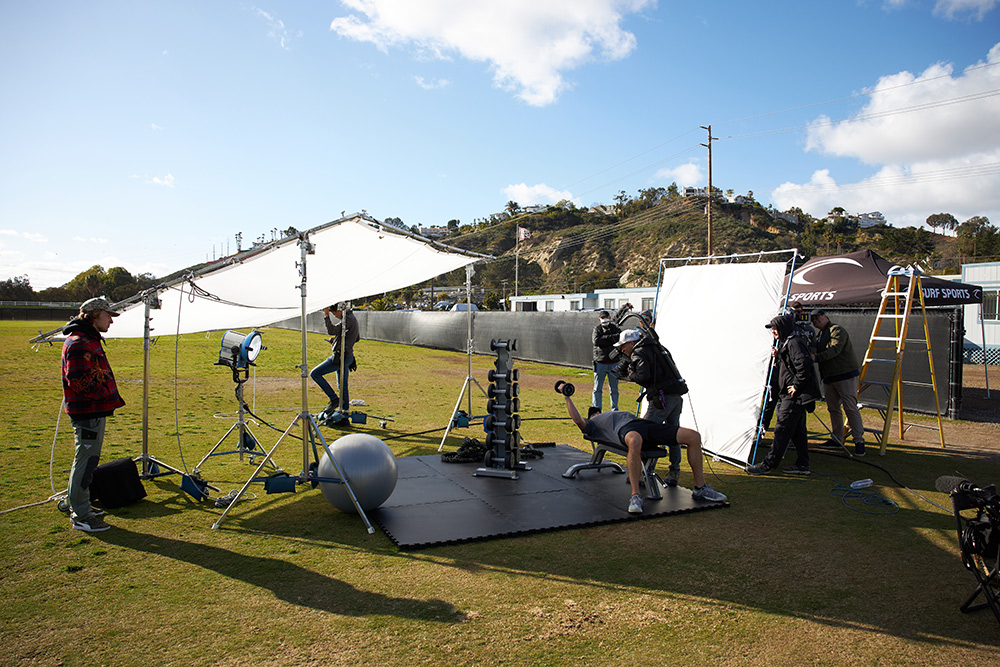
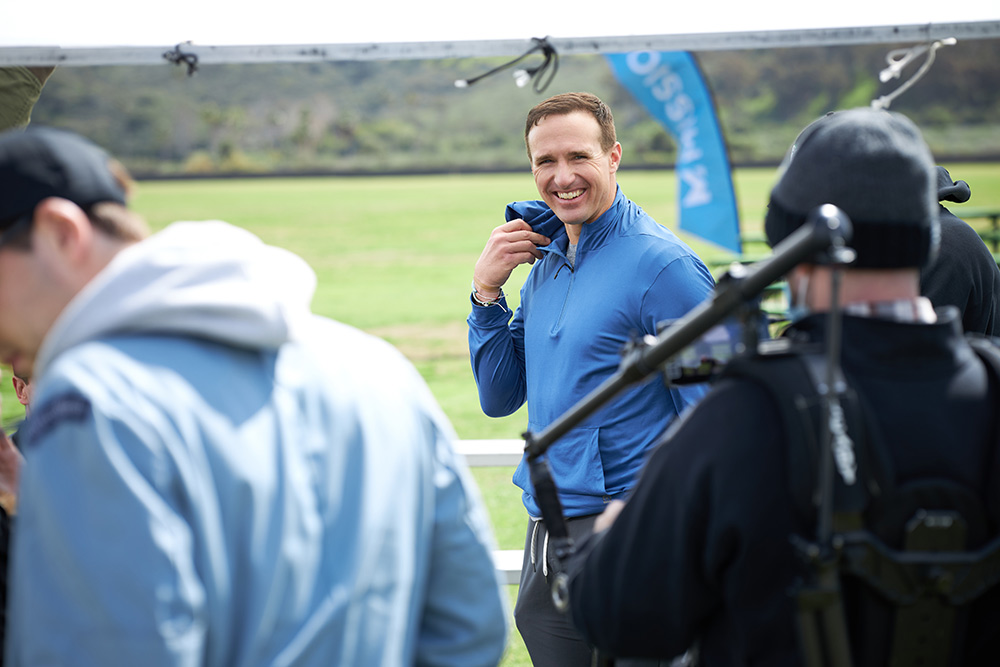
Flex alert here, guys. I shot Drew Brees recently, alongside a video crew in San Diego. Drew was a laid back, accommodating dude with a generally great attitude towards the whole crew. It was a high level day on my fun-o-meter. Enough about me. Today we set out to answer the question: Can we shoot video and photo simultaneously on the same day? Should we do that?
Convenience vs. Quality
After all, the talent is there, lighting is there, maybe a hair and makeup artist, the clothing or product is there. You can have a still photographer weave in and out of the video sets to get captures. It will be much cheaper than doing a separate photo shoot. But will you get the same quality? In order to understand this, let’s go over some key differences between photography and videography.
Key Differences: Photography vs. Videography
Resolution
A 4k video is only about 8.2 megapixels compared to 30-50 megapixels for photographs. A video is just a bunch of photographs that are meant to be played back in sequence quickly. You don’t notice that a video is made of separate images. Typically video is recorded at between 24-60 frames per second. For this reason, the resolution has to be lower in video or the cameras wouldn’t keep up. Grabbing still frames from a video will not match the quality of a dedicated photo capture.
Shutter Speed
In cinematography, we generally use a shutter speed that is twice the frame rate (aka 180 degree shutter), which at standard frame rates is roughly 1/60-1/125 second. Some motion blur in video frames is acceptable because when frames are played back in sequence, the blur is not perceivable. In still photography this is not acceptable and we tend to use much faster shutter speeds to capture a crisp image.
Lighting Differences
While video crews do bring lighting, often loads of it, they use continuous lighting while photographers usually use strobes (flashes). Strobes are much more powerful and put out a concentrated burst of light which lasts only a fraction of a second, rendering still images that are sharper in many cases and making it easy to freeze fast action. In addition, strobes being more powerful means its easier to balance the daylight with any artificial light. So, while it is indeed possible to piggy back a video crew’s lighting, it is by no means ideal. While shooting on the same day, its big ask to have the still photography crew set up strobes around a video crew’s lighting.
Video Post Production
The goal of video is usually to MINIMIZE post production. Editing a blemish or problem with wardrobe can be a tedious process and need to be done frame by frame. Imagine having to remove a neck tattoo from the talent for 20 seconds of a 60 frame per second video. It is possible but not practical. The tattoo may need to be covered with makeup. This potentially adds to crew size and prep time on set.
Photography post production
In photography, we shoot with the mindset of getting things right in camera but leveraging post production to make things better than they could be straight from camera. The possibility of combining multiple shots easily or editing blemishes in post can allow a photography crew a simpler approach. In photo, if we need a darker background and a brighter foreground, we can easily composite a darker shot and lighter shot together rather than have a crew trying to light an entire scene. If we need to remove a logo from a piece of clothing or a tattoo its often a simple fix.
Scrutiny
This is a big one. While video is a fluid situation, photos are subject to more scrutiny because, in a static frame, the viewer has more time to scrutinize and fixate on details. This is why lots of care goes into retouching photos and more time is often spent on direction of light and shadow for a single still frame (especially for product shots where highlights and shadows need to be perfect).
Directing Style
While a video crew has a director who is trained to place the talent into scenarios and dynamic actions, a still photographer often does the direction himself. Still photo direction is different in several ways:
-We direct the subject into static poses that they often need to hold.
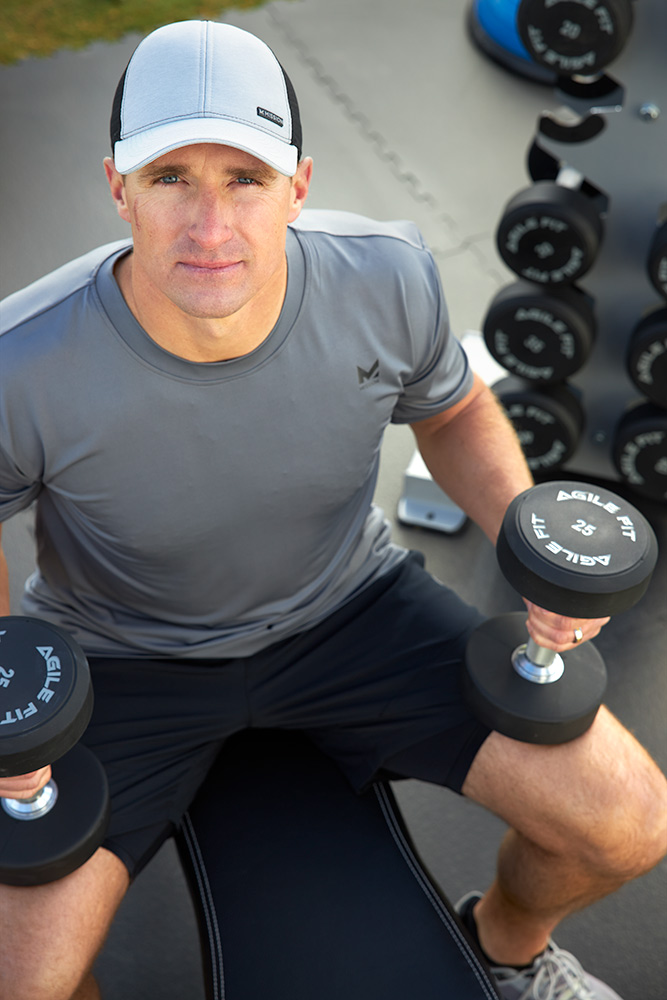
-We often direct the subject to do something similar to the action but not do the actual movement, in order to get a better result. (This is common in fitness/exercise photography where often the movement can be done with completely good form but still look very wrong in a static image).
-We often direct subjects in stills to mimic talking without actually talking.
-We often coax good expressions out of people and the coaching needs to be repeated for still capture.
For these reasons, its somewhat better to have the still photographer direct the subject specifically for stills than try to capture the motion simultaneously with a video crew’s director. Sometimes this can be done between the video crew’s shots if its scheduled but its not always possible.
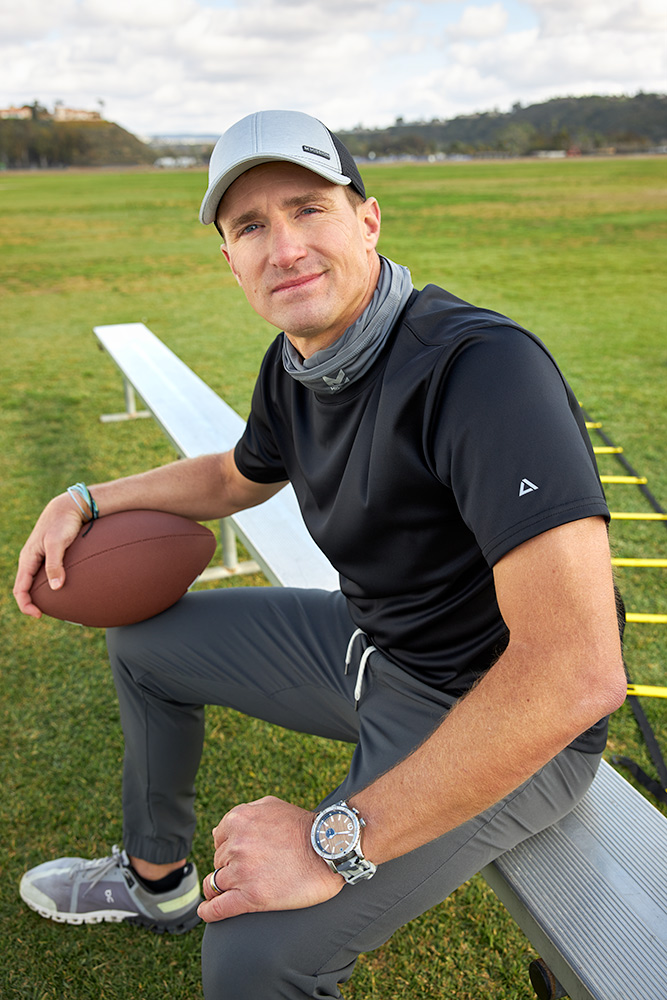
Portrait of Drew Brees I captured between video setups.
How to Make it Work
So far I’ve done handful of co-ed video and still shoots with good results. I think we definitely captured a good variety of images for the client that met their expectations and produced the desired outcome (given the constraints). Would I have preferred to bring my own photography-specific lighting crew and have the talent all to myself for the entire day? Certainly. Are there ways to make a joint production generate the best number of usable images given the circumstances. Certainly yes. Lets talk about some of those.
Production Schedule
This is probably most important. As a photographer, take the lead and make sure after each video set shot, you’re able to have some dedicated photography time with the subject where you can be directing. Otherwise you’re leaving capture of the right facial expressions and movements to chance. You can also risk having video crew members or gear in your way since they’re often moving as they shoot.
Lighting
Video sets often require very fast setup and strike of different scenes. Make it clear that you need that scene’s lighting to remain up until stills are finished. Otherwise crew will often be in a hurry to get stuff to the next scene and lighting for stills can be weak. (Again, part of production schedule). If you do need to set up photo specific light and are allowed time to do so, try to mimic the video lighting setup for continuity.
Communication
Get to know the key video crew people by first name and communicate your needs. Everyone wants efficiency, but its important to maintain control of your limited time with talent to maximize good captures.
Wrap
If your company is thinking of shooting video and photo together in one shoot to save costs, proceed with caution! Work closely with your photographer and video crew to plan the best approach and make sure they’re on the same page. As a long time commercial photographer her in north San Diego, I have my short list of preferred video vendors and videographers that I work most effectively with. Don’t hestitate to reach out if you need someone to manage both your photo and video production. I would love to hear from you.
Shooting stills and video together takes planning. A shot list is the quickest way to see what will actually fit in the day.
Get new lighting tutorials by email
When a new guide like this one goes up, be the first to know. A few emails a year, no spam.
I share the lighting setups and behind‑the‑scenes from shoots like this on Instagram.
Follow @robandrewphoto